
Why Floor Preparation Is Just as Important as the Resin System
When specifying a new resin flooring system, much of the attention naturally goes towards the finished surface. The type of resin, its durability, chemical resistance, slip resistance and appearance are all important considerations.
However, the performance of a resin floor doesn’t begin with the final coating. Preparation of the existing substrate is one of the most important stages of the entire installation.
Even a high-quality resin system can struggle to perform as intended if it is applied to a surface that hasn’t been properly prepared. At Zenith, preparation forms an integral part of our flooring installations, with the approach determined by the existing substrate, its condition and the requirements of the new system.
Creating the Right Surface for Resin Flooring
Before a resin system can be installed, the existing floor needs to provide a suitable surface for adhesion.
Industrial and commercial floors can accumulate contaminants and experience considerable wear over their lifetime. Existing coatings may also need to be removed, while cracks, uneven areas and other defects may require attention before a new system can be installed.
Mechanical preparation methods such as diamond grinding, shot blasting and orbital sanding can be used depending on the substrate and flooring specification.
The objective isn’t simply to make the existing floor look cleaner. Preparation creates the appropriate surface for the subsequent primer and resin layers and gives the flooring system the best possible foundation.
Diamond Grinding
Diamond grinding is one method commonly used to mechanically prepare concrete floors before resin application.
A good example is Zenith’s resin flooring project for a precision engineering company. Following the client’s relocation to a new manufacturing facility, Zenith was tasked with providing a floor that would be tough, hard-wearing and easy to maintain.
The 260m² surface was prepared using a diamond grinder before the high-build epoxy resin coating was applied.
It demonstrates an important point: the performance of the finished coating begins with creating the right substrate underneath it.
Preparation Isn’t the Same for Every Floor
Different substrates and operating environments can require very different preparation techniques.
For Zenith’s 6,000m² aircraft hangar flooring project, orbital sanding was used to prepare the substrate before the specialist resin system was installed.
The finished surface needed to provide both slip and chemical resistance, including resistance to aviation fuel. Preparation was followed by a high-build epoxy coating, kiln-dried quartz aggregate and a final chemically resistant coating.
This is a good example of why preparation needs to be considered as part of the complete flooring specification rather than as a standard process applied in exactly the same way on every project.
Repairs Can Be Just as Important as Preparation
Mechanical preparation can expose defects that need to be addressed before the new flooring system is applied.
A particularly good example can be seen in Zenith’s paint workshop and spray booth refurbishment at a Coventry-based manufacturing centre.
The project required extensive repairs to the existing floor. Epoxy resin mortar was trowelled into damaged areas to match the existing profiles, creating a suitable surface for the new flooring while also removing potential trip hazards.
Because the facility remained operational, dust suppression was also particularly important during preparation, with industrial vacuum recovery equipment used and sensitive equipment protected.
It shows that preparation isn’t simply about grinding a floor before applying resin. Existing damage needs to be properly dealt with rather than simply covered by the new system.
Why Is Priming Important?
Once the substrate has been mechanically prepared and the necessary repairs completed, priming can form another important stage of the flooring system.
The primer helps provide the appropriate base for the subsequent resin layers and needs to be selected as part of the overall specification.
Zenith’s Floor Treatment for New Packing Area provides a good example.
For this project, the existing surface was prepared using a diamond-headed grinder under strong vacuum extraction. Zenith then applied two coats of KDR EPO primer, allowing both to cure fully before installing the final KDR EPO Flow self-smoothing system.
The completed project provided the health products producer with a seamless, durable and easily maintained surface within its new packing area.
What About Existing Tiles?
Preparation can become particularly important when a new flooring system is being installed over an existing surface rather than directly onto concrete.
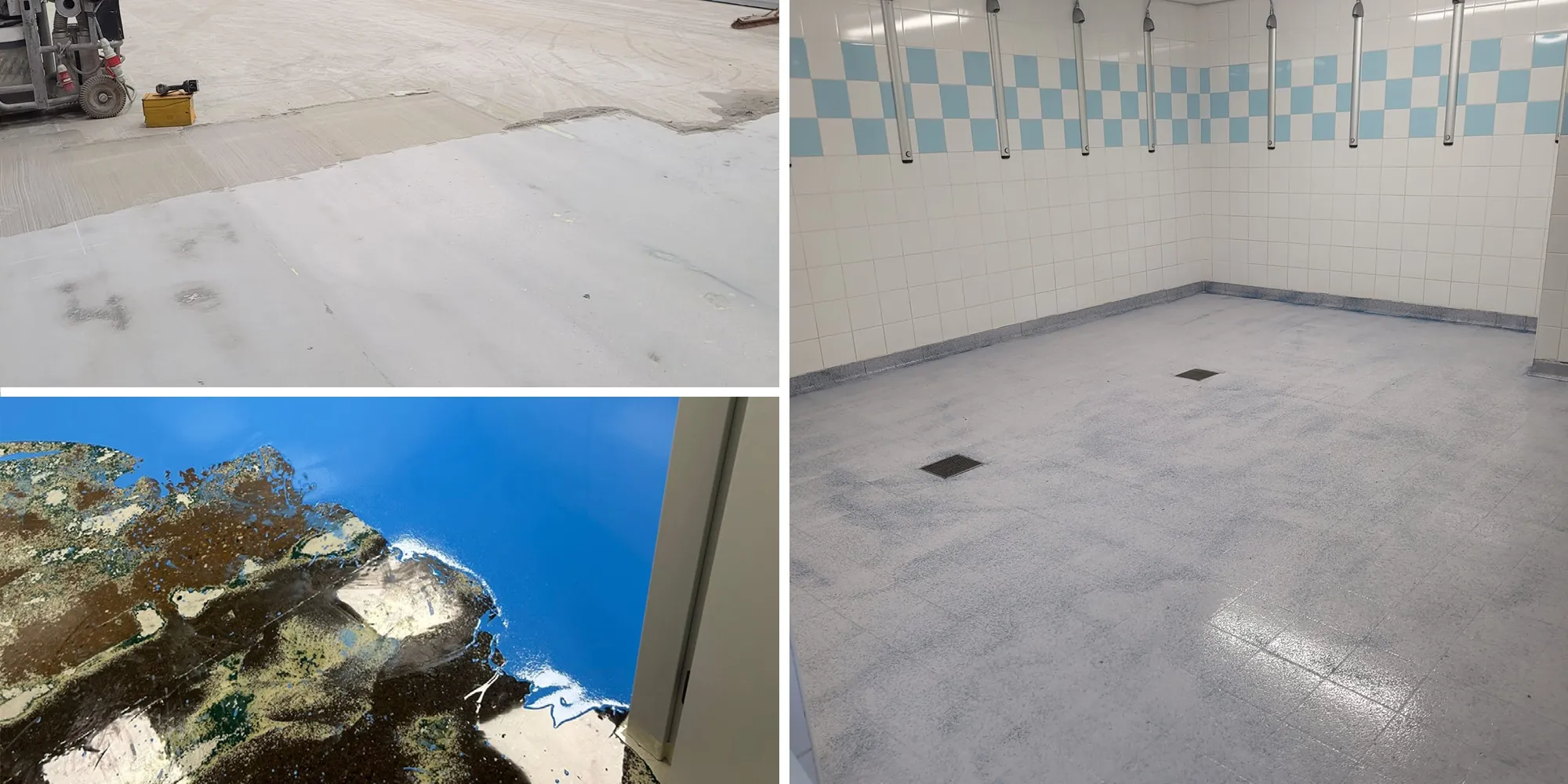
During Zenith’s CBS Arena shower area refurbishment, for example, the existing tiles were diamond ground to prepare them for the new screed.
An Altroproof Solo primer with a light scattering of quartz sand was then applied before the Altroscreed Quartz system was installed. This allowed Zenith to overlay the existing tiles rather than removing them completely.
It’s another example of how the preparation method needs to be determined by the surface already in place and the system being installed above it.
Different Environments Require Different Approaches
There isn’t a single preparation process that’s appropriate for every resin flooring project.
A manufacturing facility may have existing coatings, contamination or damaged areas to address. A food or production environment may place particular importance on dust control and hygiene. Specialist facilities may require flooring capable of coping with chemicals, oils or other substances.
Even the underlying material can influence the specification. Zenith has previously worked with challenging substrates such as asphalt, where the existing surface was ground and pitted areas treated before a flexible polyurethane system was installed.
That’s why assessing the condition and construction of the existing floor before work begins is so important.
Building a Resin Floor from the Ground Up
The finished resin surface may be the part everyone sees, but its performance relies heavily on the work completed underneath it.
Grinding, sanding, repairs, priming and other preparation processes aren’t separate from the flooring installation – they’re fundamental parts of it.
Importantly, Zenith’s specialist floor preparation methods are designed to be 99% dust free, using professional dust extraction equipment to control airborne dust during the preparation process. This is particularly valuable when working within operational manufacturing, production and commercial environments where disruption needs to be kept to a minimum.
At Zenith, we provide commercial and industrial resin flooring solutions across the UK, with preparation and flooring systems specified around the individual substrate and demands of each environment.
From manufacturing facilities and workshops to food production, commercial premises and specialist environments, our team can assess the existing floor and recommend an appropriate preparation and flooring system.
To discuss an upcoming resin flooring project with Zenith, please get in touch with our team.